

Beyond the Checklist: Bridging Compliance and Real-World Security
Many organizations proudly display their cybersecurity certifications - SOC 2, ISO 27001, HIPAA, and others – yet, they continue to experience data breaches, system outages, and security failures. Why? If we set aside known culprits (like ransomware, zero-day exploits, human error, insider threat etc.) the real problem often lies deeper, in the foundation of how security is approached. Here’s what’s going wrong behind the scenes.
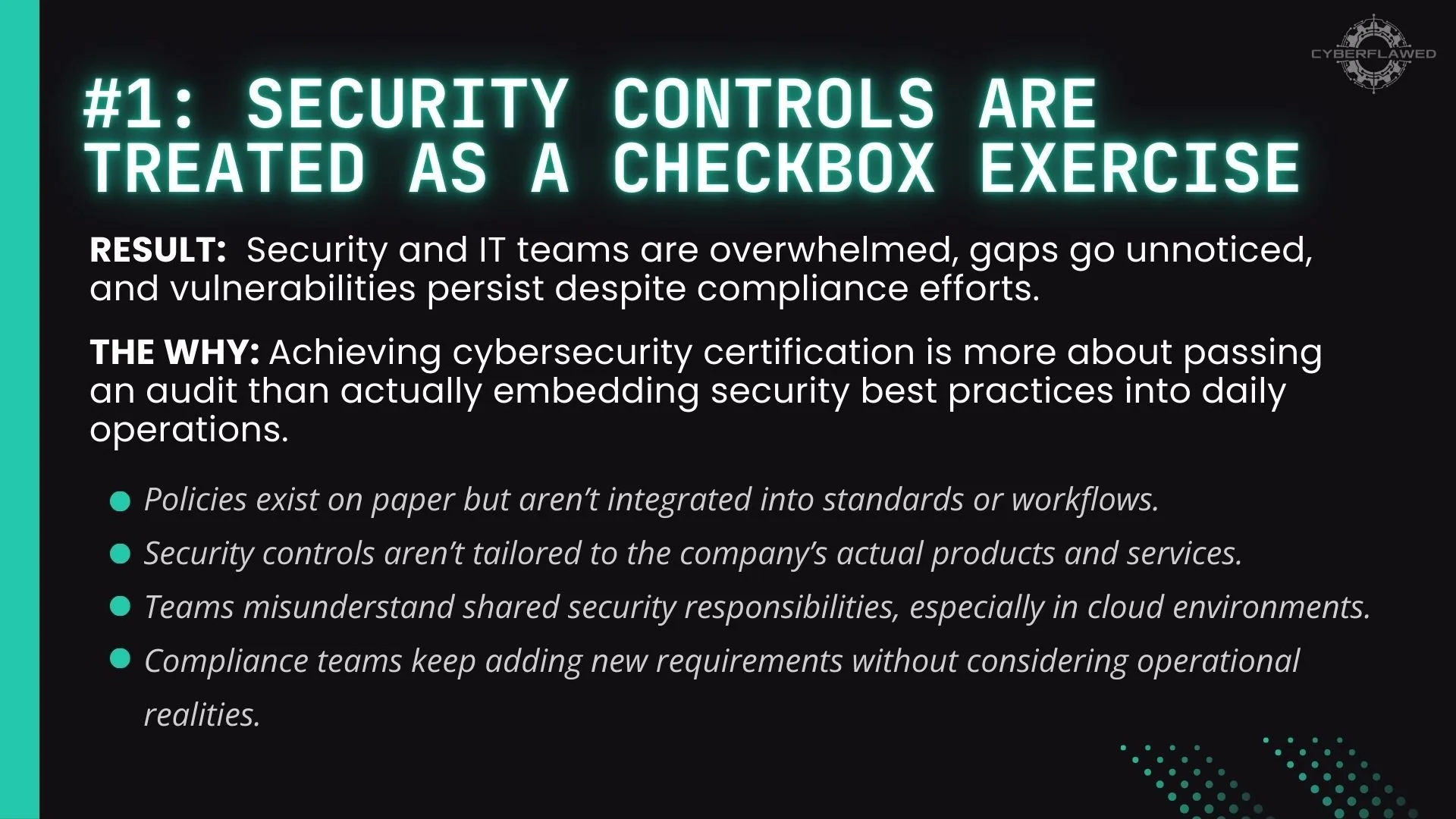
#1: Security Controls Are Treated as a Checkbox Exercise
For many companies, achieving cybersecurity certification is more about passing an audit than actually embedding security best practices into daily operations.
Policies exist on paper but aren’t integrated into workflows.
Security controls aren’t tailored to the company’s actual products and services.
Teams misunderstand shared security responsibilities, especially in cloud environments.
Compliance teams keep adding new requirements without considering operational realities.
As a result, security teams are overwhelmed, gaps go unnoticed, and vulnerabilities persist despite compliance efforts.
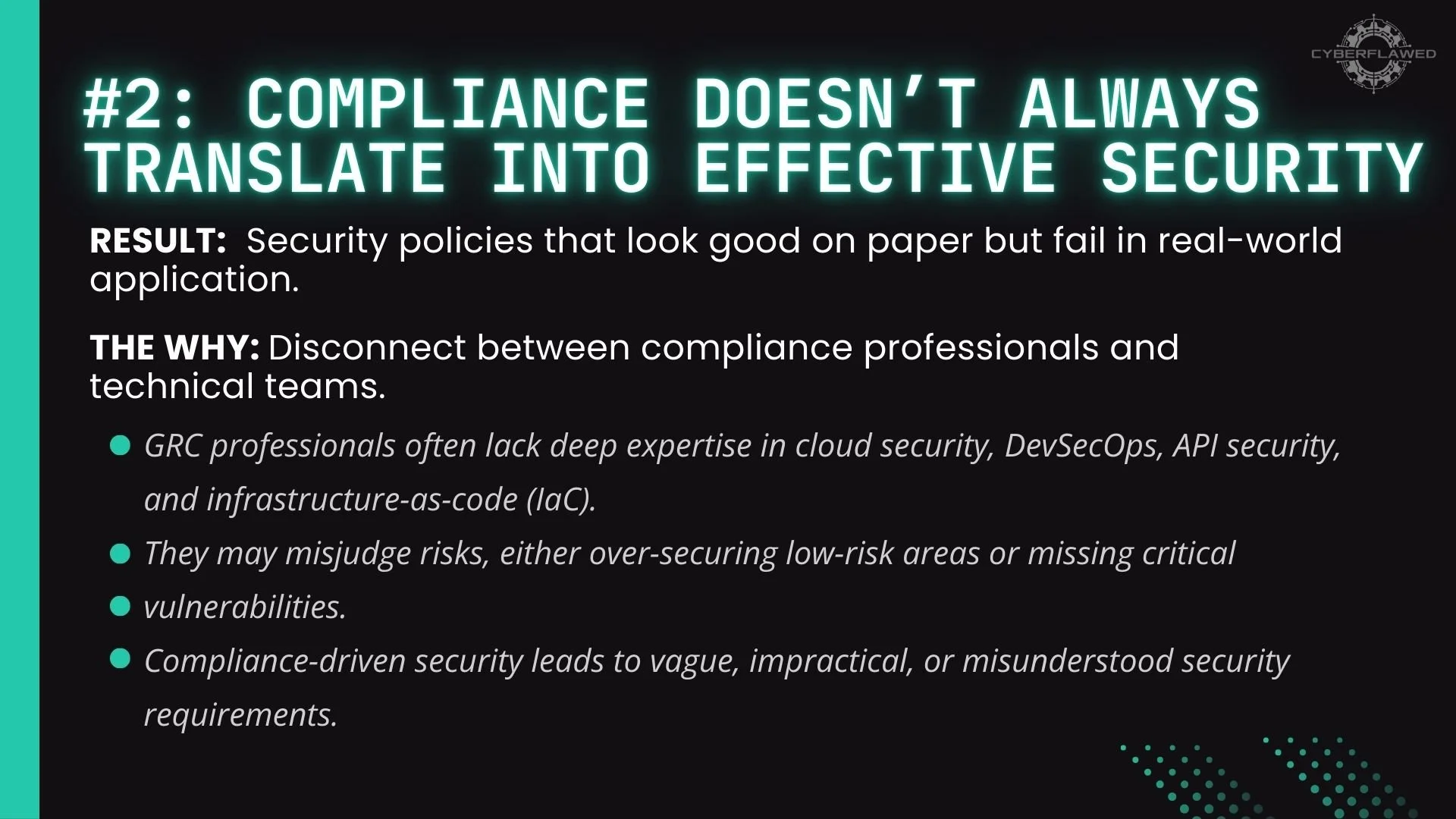
#2: Compliance Doesn’t Always Translate into Effective Security
One of the biggest challenges is the disconnect between compliance professionals and technical teams.
GRC professionals often lack deep expertise in cloud security, DevSecOps, API security, and infrastructure-as-code (IaC).
They may misjudge risks, either over-securing low-risk areas or missing critical vulnerabilities.
Compliance-driven security leads to vague, impractical, or misunderstood security requirements.
This misalignment results in security policies that look good on paper but fail in real-world application.
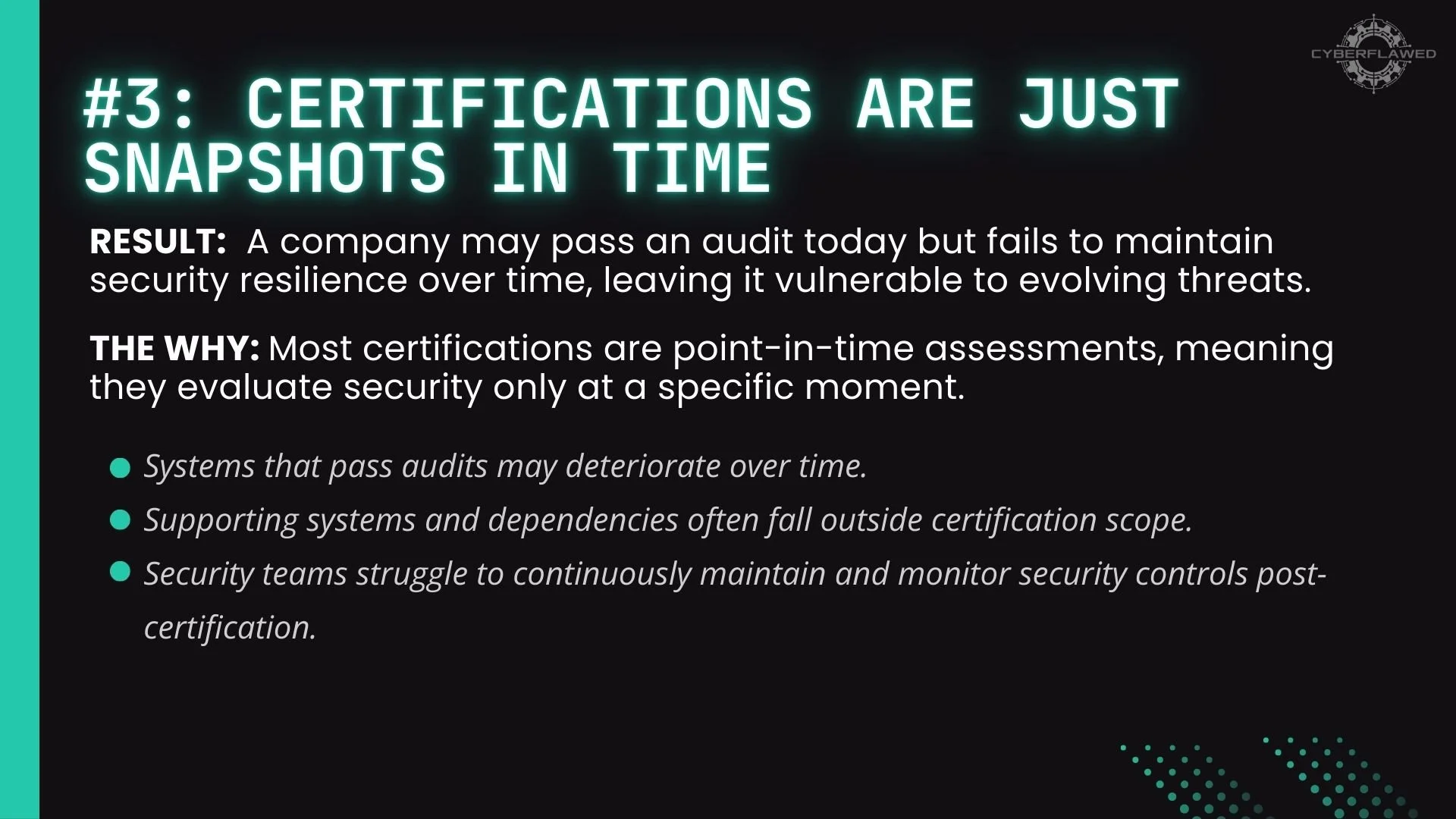
#3: Certifications Are Just Snapshots in Time
Most certifications are point-in-time assessments, meaning they evaluate security only at a specific moment.
Systems that pass audits may deteriorate over time.
Supporting systems and dependencies often fall outside certification scope.
Security teams struggle to continuously maintain and monitor security controls post-certification.
A company may pass an audit today but fail to maintain security resilience over time, leaving them vulnerable to evolving threats.
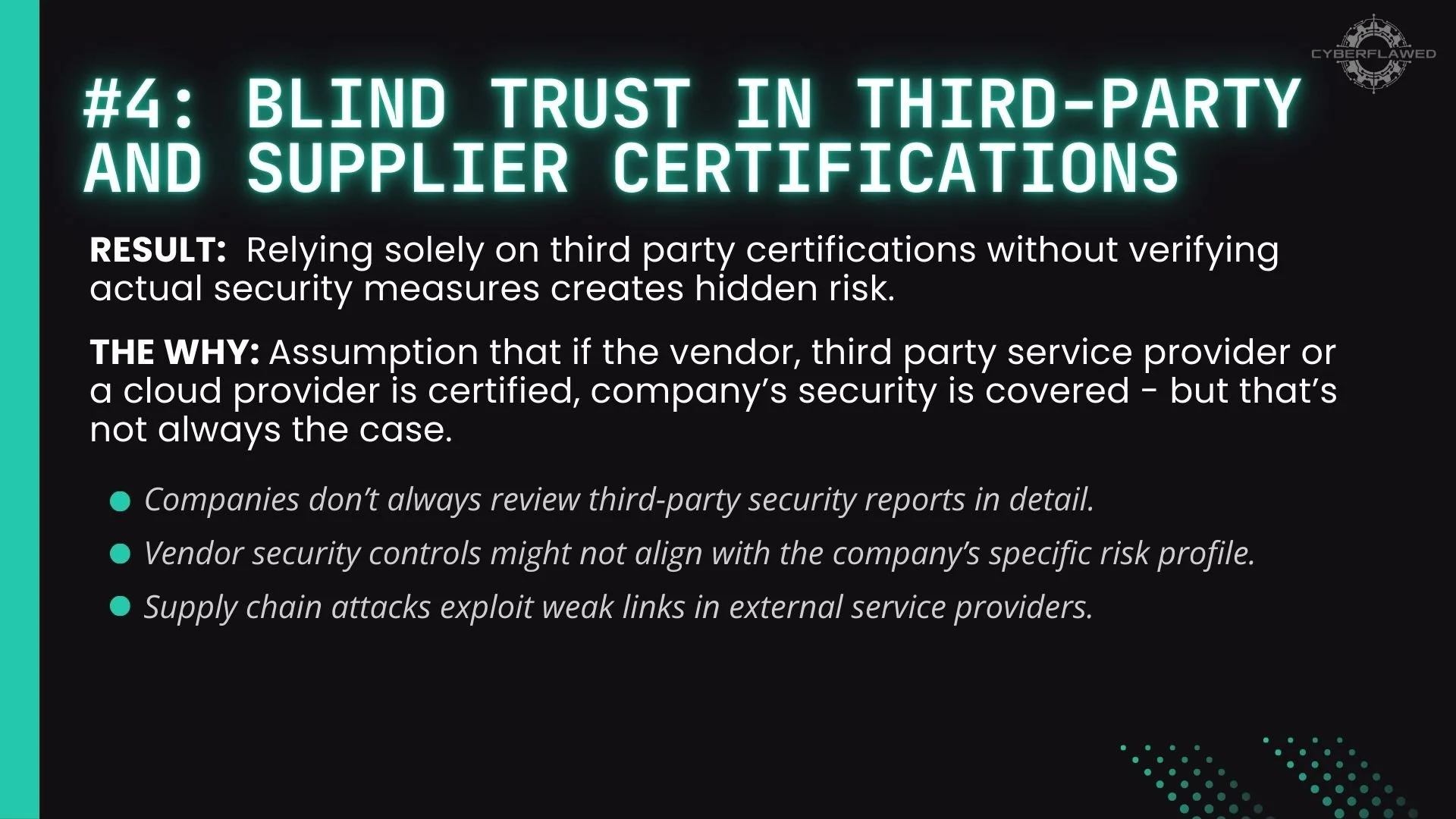
#4: Blind Trust in Third-Party and Supplier Certifications
Many organizations assume that if their vendors and cloud providers are certified, their own security is covered—but that’s not always the case.
Companies don’t always review third-party security reports in detail.
Vendor security controls might not align with the company’s specific risk profile.
Supply chain attacks exploit weak links in external service providers.
Relying solely on third-party certifications without verifying actual security measures creates hidden risks.
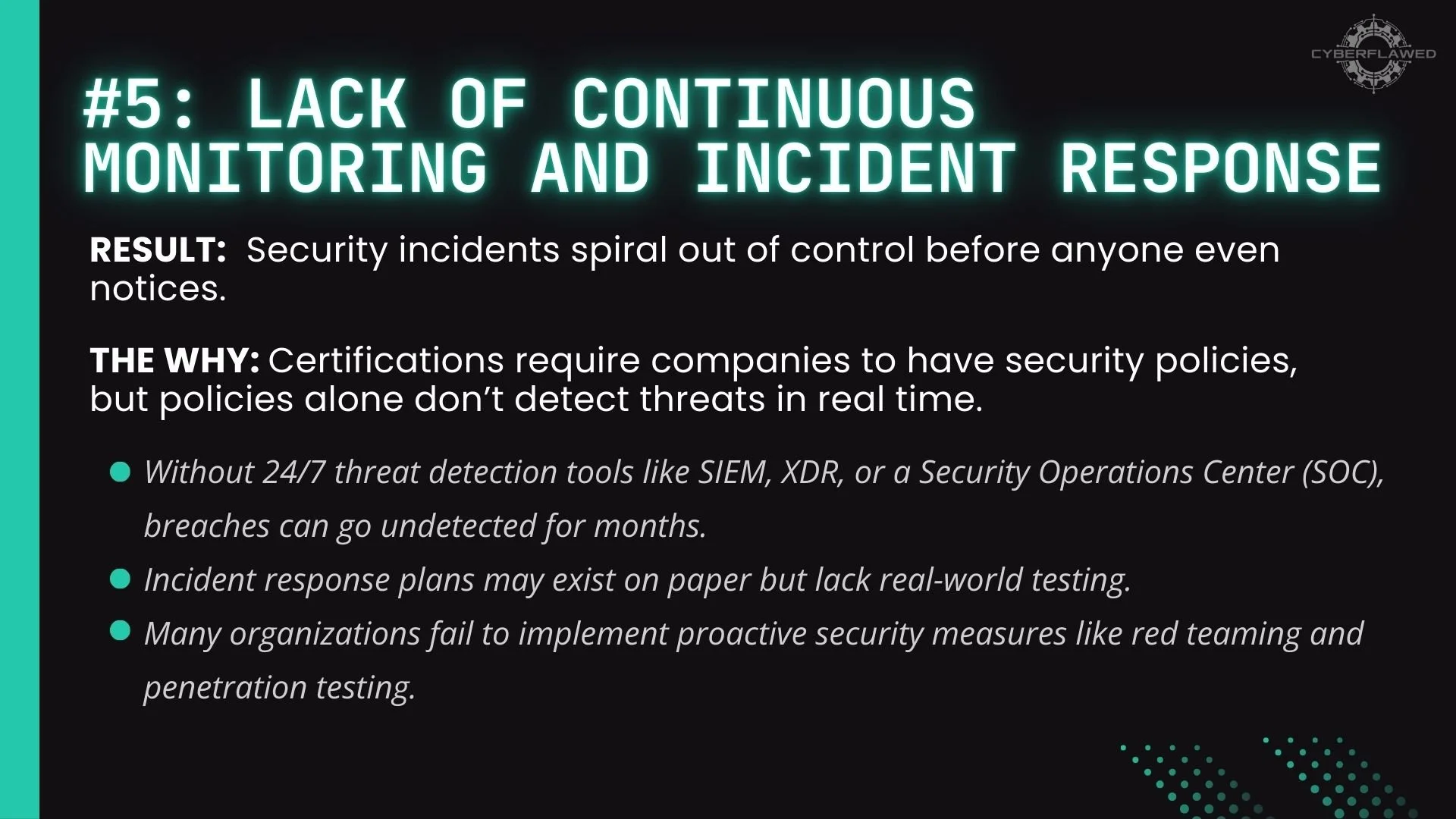
#5: Lack of Continuous Monitoring and Incident Response
Certifications require companies to have security policies, but policies alone don’t detect threats in real time.
Without 24/7 threat detection tools like SIEM, XDR, or a Security Operations Center (SOC), breaches can go undetected for months.
Incident response plans may exist on paper but lack real-world testing.
Many organizations fail to implement proactive security measures like red teaming and penetration testing.
Without continuous monitoring, security incidents can spiral out of control before anyone even notices.
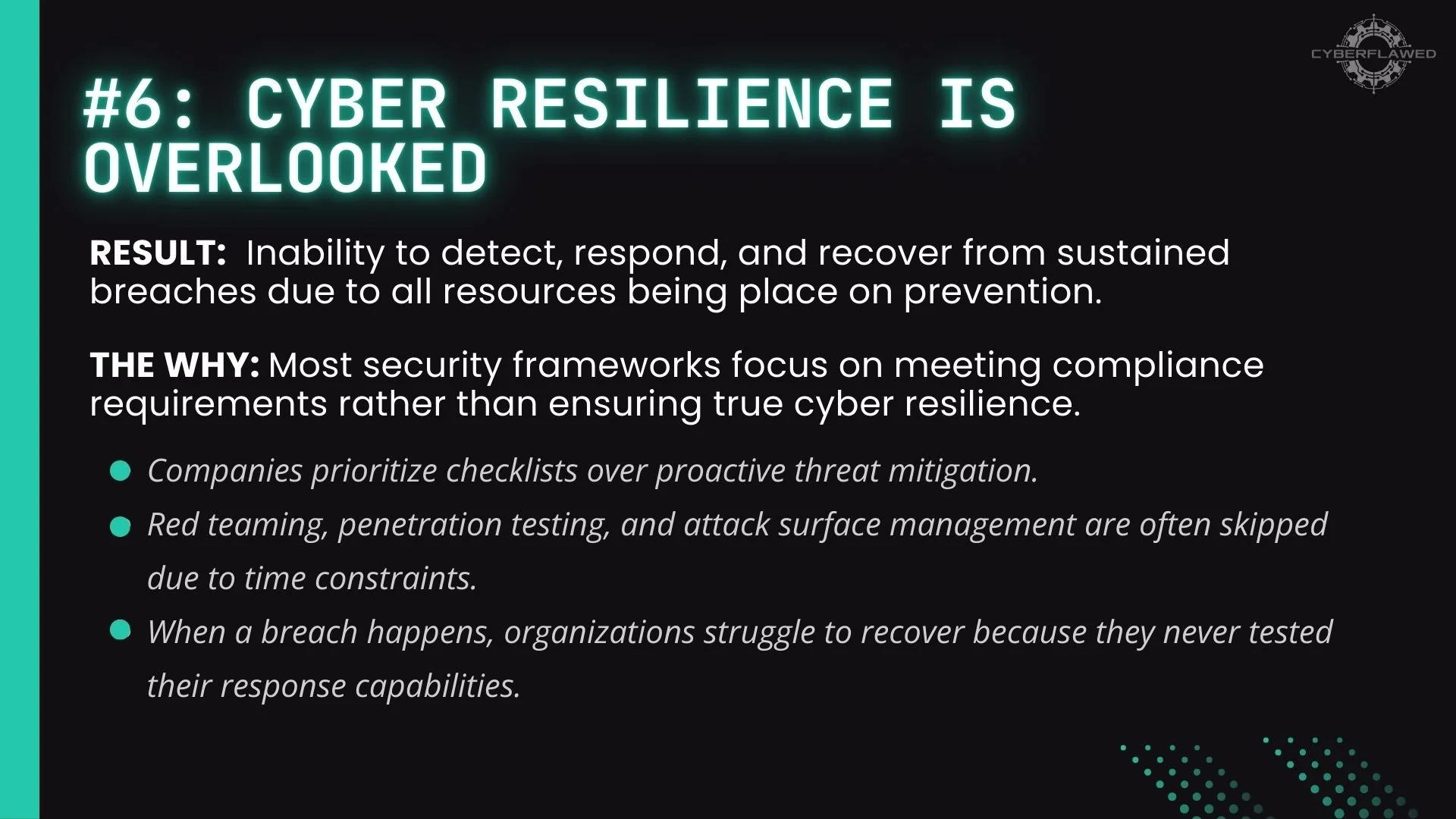
#6: Cyber Resilience Is Overlooked
Most security frameworks focus on meeting compliance requirements rather than ensuring true cyber resilience.
Companies prioritize checklists over proactive threat mitigation.
Red teaming, penetration testing, and attack surface management are often skipped due to time constraints.
When a breach happens, organizations struggle to recover because they never tested their response capabilities.
True cybersecurity isn’t just about preventing breaches—it’s about being able to detect, respond, and recover from them effectively.
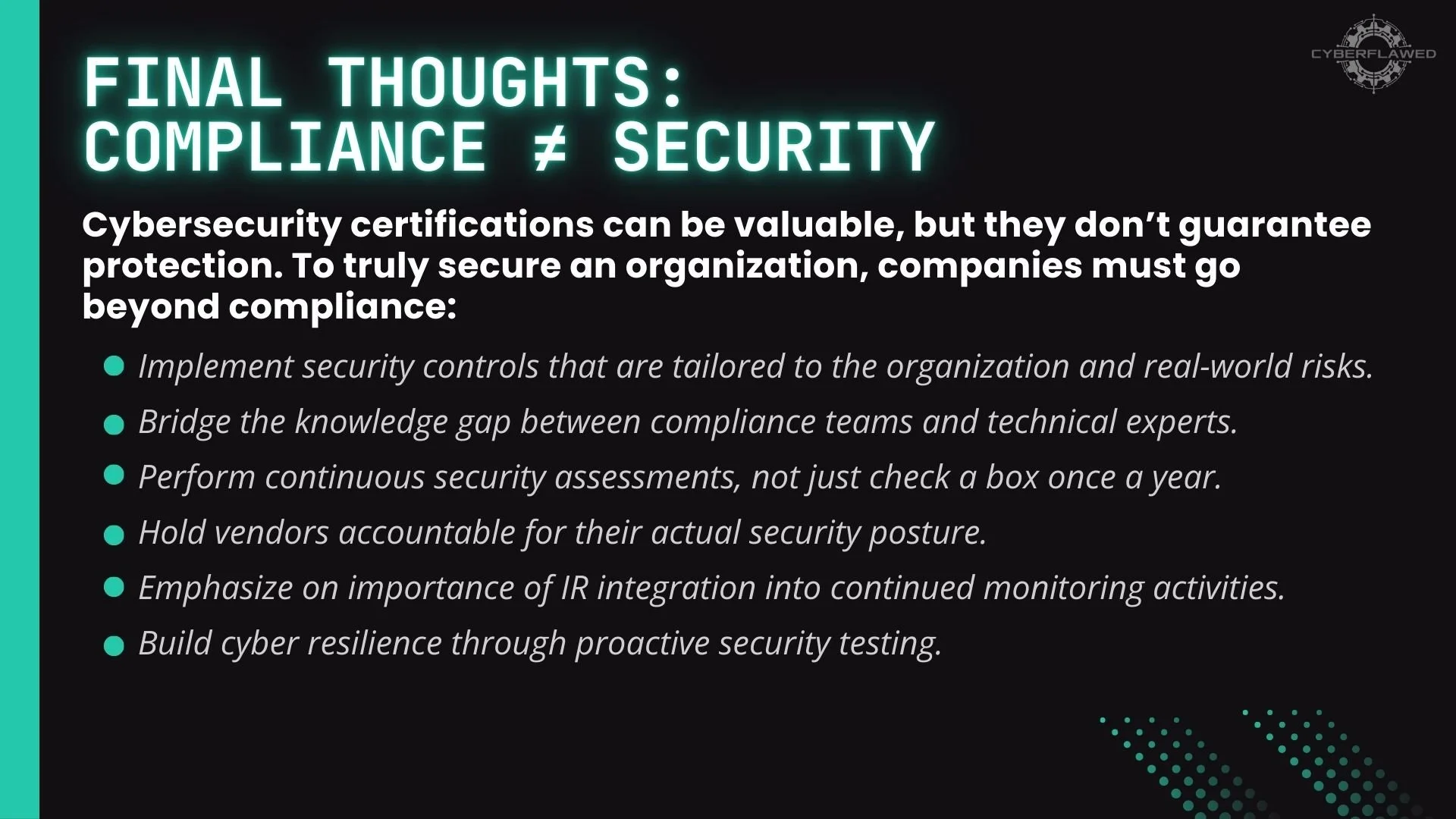
Final Thoughts: Compliance ≠ Security
Cybersecurity certifications can be valuable, but they don’t guarantee protection. To truly secure an organization, companies must go beyond compliance:
Implement security controls that are tailored to real-world risks.
Bridge the gap between compliance teams and technical experts.
Perform continuous security assessments, not just check a box once a year.
Hold vendors accountable for their actual security posture.
Emphasize on importance of incident response integration into continued monitoring activities.
Build cyber resilience through proactive security testing.
Security isn’t a one-time achievement—it’s an ongoing process. Organizations that fail to recognize this will continue to face breaches, even with all the right certifications in place.
