

Centralized Decentralized and Hybrid GRC Approach: Which to Choose?
Governance, Risk, and Compliance (GRC) frameworks are crucial for organizations to align operations with regulatory requirements, manage risks effectively, and maintain business integrity. Companies adopt either a centralized or decentralized approach to GRC based on their size, industry, organizational structure, and strategic objectives. Understanding the pros and cons of each model is essential for selecting the most suitable system for long-term success. This article explores the advantages and disadvantages of centralized and decentralized GRC frameworks to help organizations make informed decisions.
Centralized Approach
A single, unified team or department oversees all governance, risk, and compliance activities within the organization. It operates as the “hub” for decision-making, reporting, and strategy implementation.
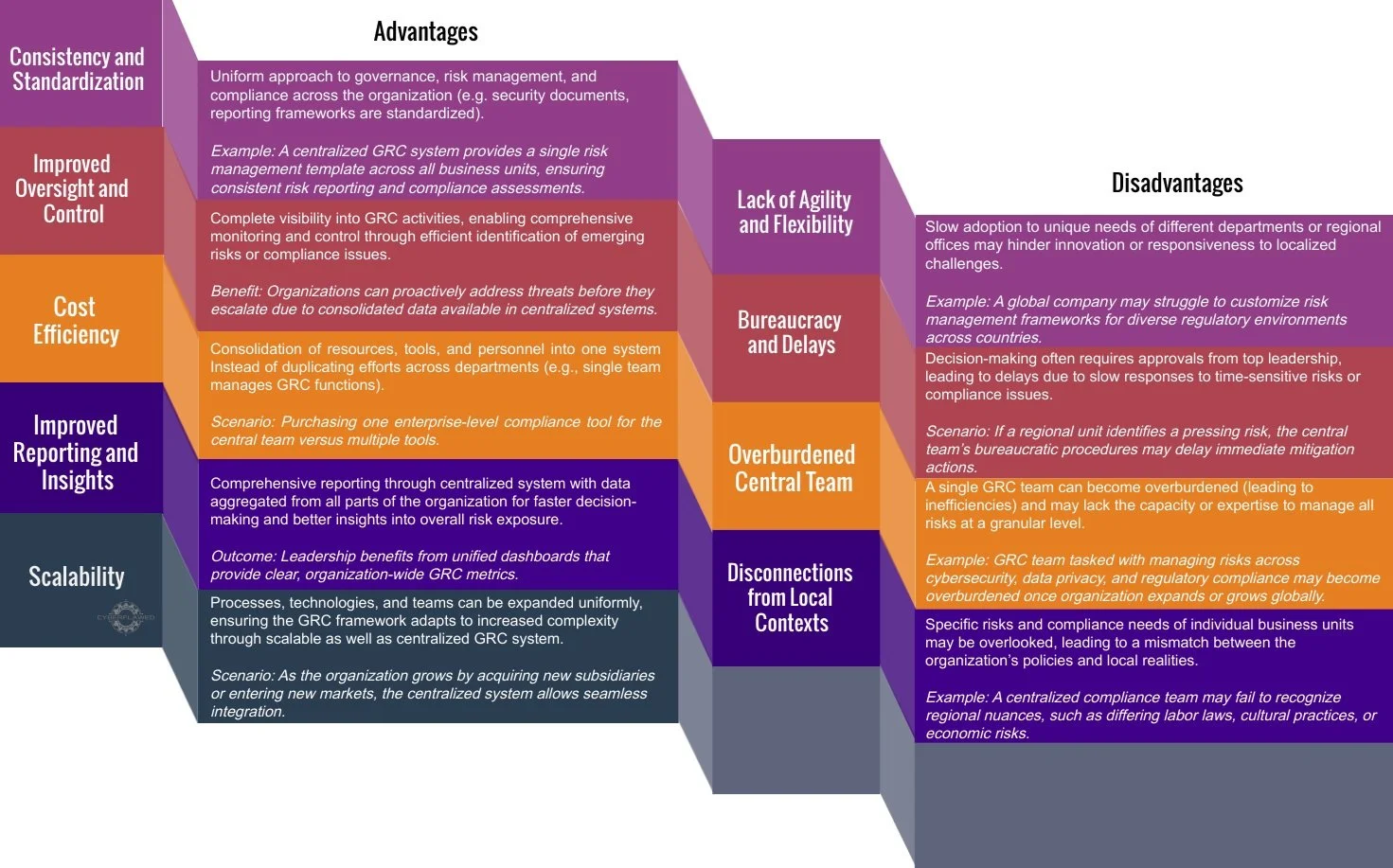
© 2025 Cyberflawed
Decentralized Approach
GRC responsibilities are distributed across various departments, business units, or regions. Each unit manages its own GRC activities while aligning with broader organizational goals.

© 2025 Cyberflawed
Which to Choose?
Both approaches aim to ensure compliance, reduce risk, and enhance governance, but they differ significantly in structure and execution. Choosing between centralized and decentralized GRC depends on factors like organizational size, complexity, industry requirements, and strategic priorities.
Centralized GRC is ideal for small to mid-sized organizations seeking standardization, cost efficiency, and enterprise-wide oversight. It works well in industries with strict regulatory requirements (e.g., finance, healthcare).
Decentralized GRC is better suited for large, complex organizations with diverse operations or global footprints. It promotes agility and localized responsiveness but requires strong coordination to mitigate inconsistencies.
Both centralized and decentralized GRC models have unique advantages and challenges. While centralization offers consistency, cost savings, and improved oversight, it may struggle with agility and local adaptability. Conversely, decentralization empowers business units and enhances responsiveness but risks inefficiencies and silos.
By carefully evaluating their needs and priorities, businesses can implement a GRC framework that fosters resilience, compliance, and long-term success. Ultimately, many organizations adopt a hybrid GRC approach, combining the strengths of both models. A central authority sets enterprise-wide policies and standards while individual business units manage localized risks and compliance efforts. This balance allows organizations to achieve consistency, responsiveness, and efficiency in their GRC strategies.
