

Strengthening the Energy and Utilities Sector Through Professional Services
The energy and utilities industry serves as the backbone of modern society, powering economies and enabling everyday life. As the sector accelerates its digital transformation, organizations face unprecedented challenges: increasingly sophisticated cyber threats, complex and evolving regulatory requirements, and the growing imperative for intelligent data management.
To navigate this demanding landscape successfully, many companies across oil and gas, renewable energy, power generation, and water utilities turn to specialized professional services in cybersecurity, data governance, IT/OT advisory, and assurance. These partnerships provide the focused expertise needed to manage risk, improve efficiency, and support long-term innovation.
1. Enhancing Cybersecurity for Critical Infrastructure
Cyber threats targeting the energy sector have become more advanced and frequent. They range from ransomware attacks to nation-state-sponsored intrusions that can disrupt essential operations, expose sensitive data, and threaten public safety.
Professional cybersecurity services help organizations build robust defenses by offering:
Advanced threat intelligence and proactive risk assessments across Industrial Control Systems (ICS), SCADA systems, and smart grids.
Expert guidance to achieve and maintain compliance with key standards, including NERC CIP (enforced by FERC, with recent approvals covering virtualization technologies and enhanced controls for low-impact BES Cyber Systems), ISO/IEC 27019, IEC 62443, ISO 27001, GDPR, and other critical infrastructure regulations.
Thorough evaluation and strengthening of supply chain security to address vulnerabilities in interconnected third-party ecosystems.
With this expert support, energy companies can shift from reactive crisis management to a resilient, proactive security posture.
2. Optimizing Data Governance for a Smarter Future
Data has become central to energy operations, driving better decision-making, customer engagement, and operational efficiency. Yet inconsistent or poorly managed data leads to inefficiencies, compliance risks, and missed opportunities.
Professional data governance services deliver structured solutions that include:
Frameworks to ensure data accuracy, consistency, and accessibility across all departments and systems.
Alignment with data protection regulations such as GDPR, as well as sector-specific requirements for emissions tracking and sustainability reporting.
A solid foundation for deploying advanced analytics, artificial intelligence, and machine learning — enabling predictive maintenance, accurate demand forecasting, and optimized energy use.
Measurable improvements in operational efficiency and waste reduction.
Well-governed data transforms information from a potential liability into a powerful strategic asset.
3. Driving Innovation Through IT and OT Advisory
The successful integration of Information Technology (IT) and Operational Technology (OT) is vital for modernizing infrastructure, incorporating renewable energy sources, and building smarter, more responsive systems.
Expert IT and OT advisory services support this transition by helping organizations:
Develop clear, customized technology roadmaps that incorporate emerging solutions such as IoT, blockchain, AI, cloud computing, and digital twins.
Implement smart grids and connected infrastructure that enhance efficiency, reliability, and sustainability.
Identify cost-saving opportunities through improved vendor management and scalable technology deployments.
Ensure seamless interoperability between new technologies and existing legacy systems, reducing downtime and improving return on investment.
Strategic advisory guidance accelerates innovation while minimizing implementation risks.
4. Strengthening Assurance for Resilience and Trust
Reliability, safety, and regulatory compliance remain fundamental to maintaining uninterrupted service and stakeholder confidence in the energy sector.
Professional assurance services help organizations achieve these objectives through:
Comprehensive risk and control assessments that span operational, physical, and digital environments.
Streamlined audit preparation and ongoing compliance management for frameworks such as NERC CIP, FERC regulations, ISO 27001, and other industry standards.
Process optimization initiatives that eliminate inefficiencies and embed stronger controls for improved performance.
Independent third-party reviews that enhance transparency and reinforce trust with regulators, investors, and customers.
These services provide the independent validation needed to demonstrate resilience and sustain long-term confidence.
Realizing the Strategic Benefits
In an era of rapid technological change and heightened expectations, professional services have become a strategic necessity rather than a luxury. By partnering with experienced specialists in cybersecurity, data governance, IT/OT advisory, and assurance, energy and utilities companies can access deep expertise, achieve greater scalability, strengthen proactive risk management, and maintain focus on their core mission of delivering reliable, sustainable energy.
The result is enhanced resilience, improved operational performance, and a stronger foundation for navigating the energy transition with confidence.
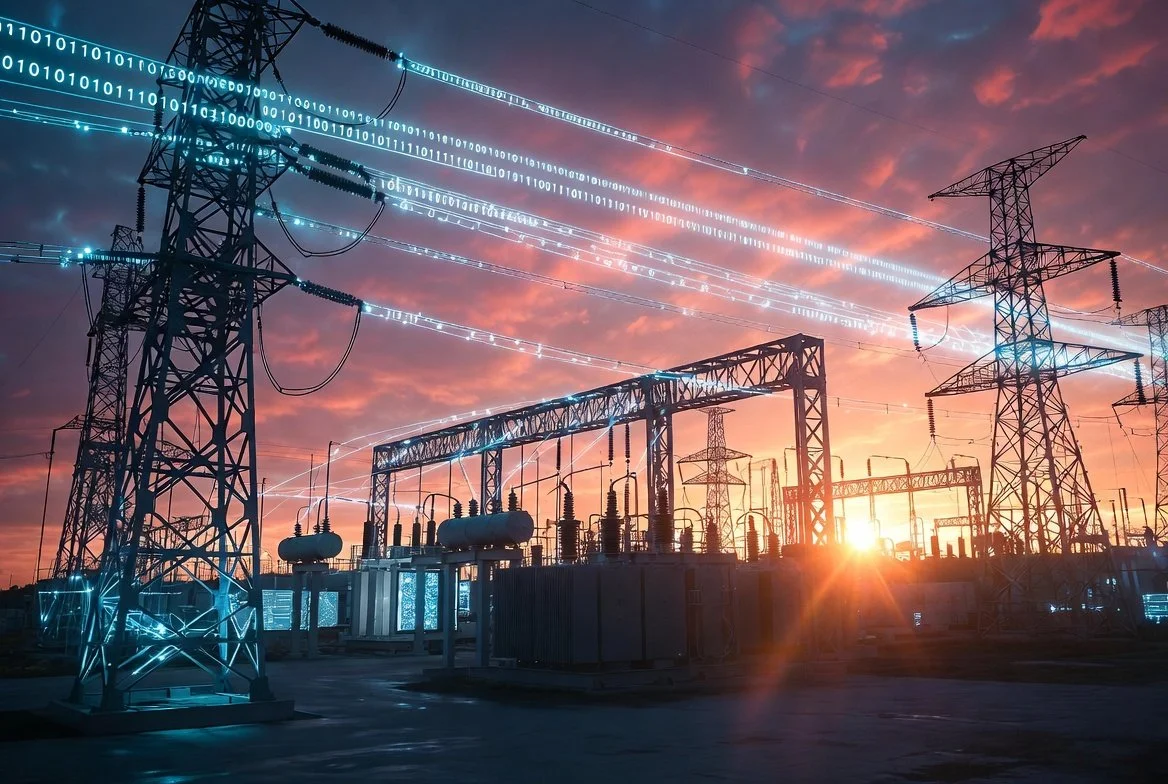
Relevant Frameworks and Regulations
-
IEC 62443 (Industrial Automation and Control Systems Security)
Scope: Comprehensive standard for securing Industrial Automation and Control Systems (IACS), widely used in the energy and utilities sector.
Key Aspects: Includes security lifecycle, risk assessments, and technical requirements for system and component security. Focus on operators, integrators, and product suppliers in the energy sector.
ISO/IEC 27019 (Information Security Controls for Energy Industry)
Scope: Tailored for information security in the energy sector, including utilities and automation systems.
Key Aspects: Extends ISO/IEC 27001 to address energy automation and SCADA (Supervisory Control and Data Acquisition) systems.
-
North America
1. NERC CIP (North American Electric Reliability Corporation Critical Infrastructure Protection)
Scope: Mandatory for securing Bulk Electric Systems (BES) in North America.
Key Aspects: Cybersecurity controls for power generation, transmission, and distribution systems. Includes access management, incident response, and physical and cybersecurity integration.
Key Standards: CIP-002 to CIP-014 cover system categorization, incident reporting, physical security, and system recovery.
2. NIST Cybersecurity Framework (CSF)
Scope: Flexible, risk-based framework for managing cybersecurity.
Key Aspects: Widely used by utilities to manage cybersecurity risks in energy systems. Includes Identify, Protect, Detect, Respond, and Recover functions.
3. NIST SP 800-82 (Guide to Industrial Control Systems Security)
Scope: ICS security guidance, specifically applicable to energy and utility sectors.
Key Aspects: Provides recommendations for securing SCADA, DCS (Distributed Control Systems), and other utility-related ICS.
4. DOE Cybersecurity Capability Maturity Model (C2M2)
Scope: Designed for energy delivery systems (electricity, oil, and natural gas).
Key Aspects: Focus on assessing and improving cybersecurity capabilities in critical energy infrastructure.
5. API Standard 1164 (Pipeline SCADA Security)
Scope: Cybersecurity for SCADA systems in the oil and gas pipeline sector.
Key Aspects: Developed by the American Petroleum Institute (API) to address SCADA-specific threats.
Europe
1. NIS2 Directive (Network and Information Security Directive)
Scope: Applies to operators of essential services, including energy and utilities.
Key Aspects: Mandates cybersecurity measures for energy systems. Includes incident reporting and supply chain security requirements.
2. ENISA (European Union Agency for Cybersecurity) Guidelines for ICS
Scope: Offers specific guidance for ICS in critical sectors, including energy and utilities.
Key Aspects: Risk assessment, incident response, and operational security for utility systems.
3. BSI Grundschutz (Germany)
Scope: Comprehensive security framework for critical infrastructure, including energy utilities.
Key Aspects: Tailored security modules for SCADA systems in energy operations.
Asia-Pacific
1. China’s Cybersecurity Law
Scope: National requirements for protecting critical information infrastructure, including energy utilities.
Key Aspects: Focus on local compliance, risk assessments, and security monitoring for utilities.
2. India: NCIIPC (National Critical Information Infrastructure Protection Centre) Guidelines
Scope: Secures critical infrastructure sectors, including energy systems.
Key Aspects: Cyber resilience strategies for SCADA and smart grid systems.
3. Australia’s Critical Infrastructure Centre (CIC) Guidelines
Scope: Ensuring the security and resilience of critical infrastructure, including energy and utilities.
Key Aspects: Emphasizes incident management, risk mitigation, and supply chain security.
Middle East
1. NESA IAS (UAE National Electronic Security Authority Information Assurance Standards)
Scope: Focused on securing critical infrastructure, including energy systems.
Key Aspects: Prescribes controls for ICS and SCADA security in utilities.
2. Saudi Arabia’s Essential Cybersecurity Controls (ECC)
Scope: National framework for protecting critical systems in energy and utilities.
Key Aspects: Provides detailed ICS-specific cybersecurity controls.
-
1. Industrial Internet Security Framework (IISF)
Scope: Designed for industrial internet systems, including energy IoT and ICS.
Key Aspects: Addresses security concerns in connected energy systems and smart grids.
2. INL Cybersecurity for Energy Delivery Systems (CEDS)
Scope: U.S. Department of Energy initiative to enhance cybersecurity for energy delivery systems.
Key Aspects: Focus on risk management, threat detection, and resilience in energy infrastructure.
3. OGCIO Smart Grid Security Guidelines
Scope: Cybersecurity best practices for smart grid systems in the energy sector.
Key Aspects: Focus on interoperability, data security, and resilience in advanced energy grids.
-
1. ISO/IEC 27036-4
Scope: Information security in supplier relationships for the energy sector.
Key Aspects: Focus on managing risks in energy ICS supply chains.
2. NIST SP 800-161 (Supply Chain Risk Management Practices)
Scope: Risk management for supply chains in critical sectors, including utilities.
Key Aspects: Comprehensive guidance on securing energy ICS supply chains.
3. World Economic Forum (WEF): Cyber Resilience in Supply Chains
Scope: Global recommendations for supply chain resilience in critical sectors.
Key Aspects: Includes energy-specific considerations for supply chain security.
-
1. IEEE 2030.5 (Smart Energy Profile 2.0)
Scope: Cybersecurity for smart grid communication protocols.
Key Aspects: Designed to secure distributed energy resources and grid communication.
2. IEC 61850 (Communication Networks for Electrical Substations)
Scope: Standards for data communication in electrical substations.
Key Aspects: Cybersecurity controls integrated into substation automation.
3. OpenADR (Open Automated Demand Response) Standards
Scope: Cybersecurity for demand response systems in smart grids.
Key Aspects: Focus on securing IoT-enabled grid systems and energy automation.
